

By Xu Shan
For 977 days, Chinese services giant Meituan was silent about its ambitions in the generative AI race. That silence ended on March 2, 2026, with the public debut of Tabbit, an AI-native browser that suggests the tech giant believes the traditional internet “window” is becoming obsolete.
Developed by Meituan’s specialized GN06 unit — the division formed after the acquisition of high-profile startup Lightyear Beyond nearly three years ago —Tabbit represents a pivot from food delivery to the lucrative world of enterprise productivity.
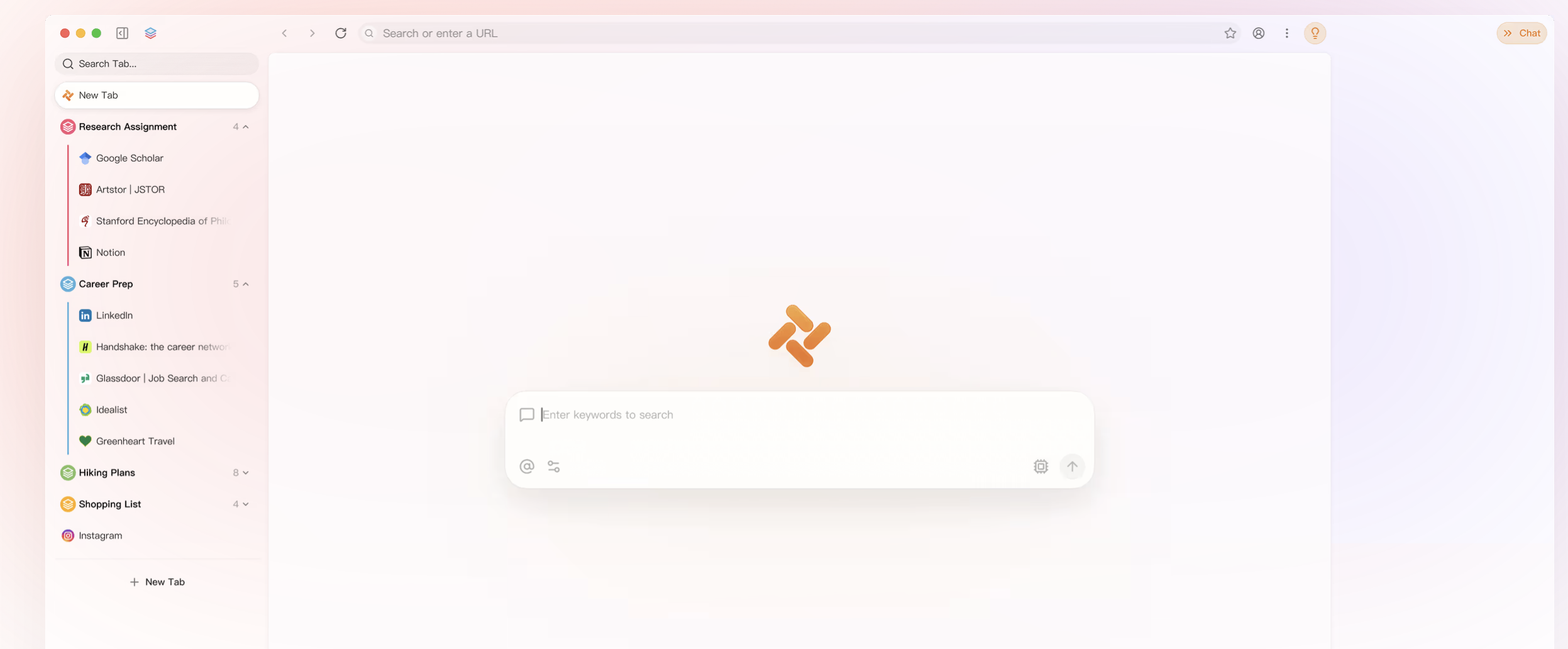
Tabbit is designed as an autonomous workbench where AI is at the center of the user experience. AI serves as the primary entry point for searching, connecting information and executing tasks within the browser. It also retains elements of traditional browser design. Its interface includes familiar tab structures and menus similar to those in established browsers such as Google Chrome and Safari, allowing users to adapt quickly.
Frictionless migration
Meituan’s entry into the browser wars begins with a direct assault on user inertia. Recognizing that switching browsers is a high-friction task, Tabbit offers a zero-cost migration. During initial setup, the software automatically identifies and mirrors a user’s existing digital life—importing bookmarks, history, extensions, and even active login cookies from Chrome, Edge, and Safari.
The strategy is clear: make the transition so seamless that the user feels they are simply using a more intelligent version of their previous browser. However, this level of integration has already raised eyebrows among privacy advocates, as the browser appears to inherit session keys that allow it to navigate password-protected internal tools, like the enterprise platform Feishu, without a fresh login.
A model-agnostic strategy
Once inside the browser, the experience diverges from traditional browsing. Users can choose between a chatbot-style interaction mode that focuses on AI responses, or an agent mode in which the AI helps execute specific tasks.
Tabbit also functions as a large-model aggregator. It supports several major Chinese AI models, including DeepSeek, Kimi, Qwen, GLM and MiniMax, along with Meituan’s own LongCat model. Users can manually select which model to use or allow the system to automatically assign one based on the task.
This model matrix allows Tabbit to act as a neutral platform, routing specific tasks to the AI best suited for them. For academic research, it might leverage one model; for coding or data synthesis, another. By not tethering the browser to a single engine, Meituan is positioning Tabbit as the Switzerland of the AI browser wars.
From browsing to executing
The defining feature of Tabbit is its shift from search to action. In a traditional workflow, a user finds information and then manually transfers it to a document or social media platform. Tabbit’s agent mode attempts to close this loop.
During testing, Tabbit demonstrated an ability to take over the mouse to perform multi-step administrative tasks. In one instance, a user tasked the browser with publishing a marketing post across multiple social media platforms. The AI navigated to the Creator Studio of sites like Xiaohongshu, bypassed the need for manual data entry by parsing an uploaded folder, and automatically populated titles, body text, and images.
Fixing the bugs
Despite the technical wizardry, Meituan’s answer to OpenAI’s Atlas remains a work in progress. Early testing revealed a human-in-the-loop necessity. While Tabbit can automate the heavy lifting, it often stumbles on nuance. Titles are sometimes truncated awkwardly to fit character limits, and the AI can fall into logic loops — repeatedly refreshing pages or reporting errors when a simple manual click would suffice.
Furthermore, the launch has not been without controversy. Shortly after the public beta began, allegations surfaced involving the unauthorized use of code from the open-source project ReadFrog. Meituan’s rapid apology and commitment to compliance highlight today’s wild west nature of AI development, where speed often comes at the expense of rigorous oversight.
The end of the browser?
Companies like OpenAI, Microsoft, and now Meituan are racing to define the next generation of the web, reflecting a broader shift in how people interact with the internet. Traditional browsers were designed around information flow, helping users search for and navigate webpages. AI-native browsers instead emphasise extracting value from information and completing tasks directly.
For Meituan, Tabbit is more than a tool; it is a hedge against a future where users no longer use browsers or visit websites but instead rely on an AI assistant to perform actions on users’ behalf — fetching, summarizing, and executing tasks for them.
Source: GeekPark (极客公园)
https://mp.weixin.qq.com/s/J9jg3zIDI3Y6fGXgSjBr4Q