
By Brent Li
A new generation of Chinese artificial intelligence companies is capturing international users and reporting unprecedented revenue growth. Yet as these startups transition from research labs to publicly traded entities, they’re colliding with the harsh realities of public markets, soaring computing costs, and the operational challenges of scaling overnight.
Recent disclosures from leading Chinese AI developers — Z.ai, formerly Zhipu, (02513.HK), MiniMax (0100.HK), and Alibaba- and Tencent-backed Moonshot AI — paint a complex picture of a sector experiencing both phenomenal commercial success and severe growing pains.
Surging global revenue and technological breakthroughs
For some startups, commercialization is accelerating at a staggering pace. Moonshot AI, known for its Kimi product lineup, reported that within 20 days of launching its K2.5 model in late January, cumulative revenue surpassed its entire 2025 total. This hypergrowth was driven by a massive spike in global paying users and API call volumes. Moonshot AI now brings in more revenue from overseas than domestically, and experts project international markets could soon account for over 70% of its business.
Founded in March 2023, the company recently achieved a $10 billion valuation after raising around $700 million from investors and holds cash reserves of about $1.38 billion. Key to its growth has been accessibility — Moonshot AI made K2.5 open-source and free, eliminating cost barriers for independent developers and smaller businesses.
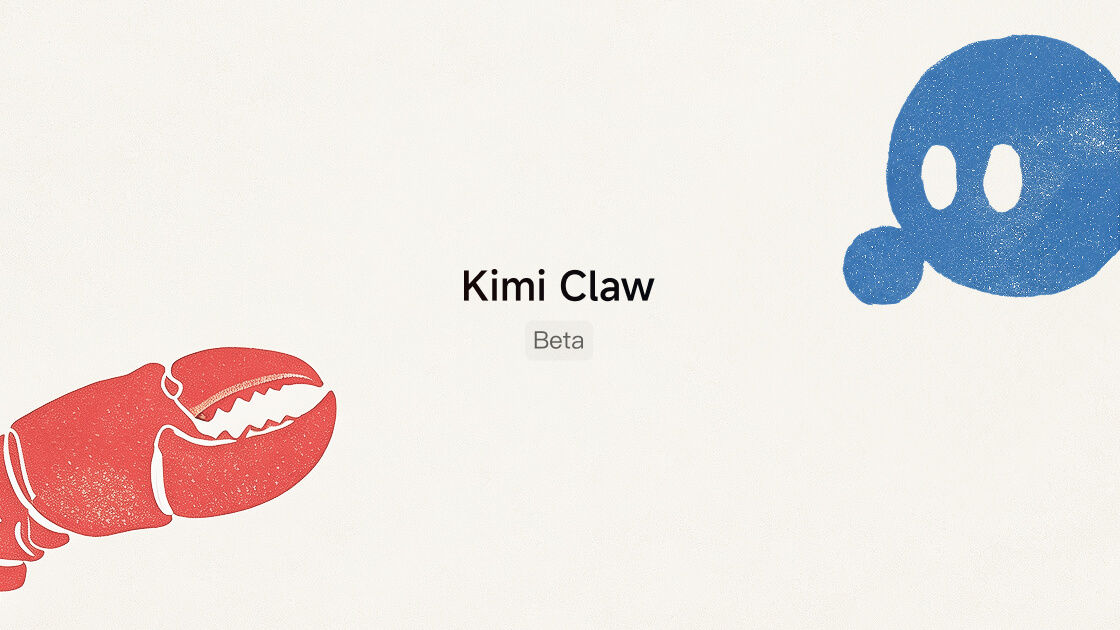
In February, the company released Kimi Claw, an AI assistant that transformed OpenClaw — a complex AI agent tool requiring dedicated servers and coding knowledge — into a one-click cloud service accessible to non-technical users.
MiniMax, which listed in Hong Kong on Jan. 9, is also gaining international traction. On March 2, its first annual earnings report since going public revealed 2025 revenue jumped nearly 160% to $79.04 million, three quarters from overseas markets across the U.S., Singapore, and other regions. With just 428 employees, MiniMax generated nearly $185,000 in revenue per employee.
The burden of success: server crashes and apologies
Explosive demand has brought steep operational challenges. Z.ai faced intense backlash after launching its flagship GLM-5 model, Pony Alpha, on Feb. 12. The model drew massive attention on OpenRouter, a global platform that lets developers access hundreds of different AI models through a single gateway, for its advanced coding capabilities and high accuracy.
Despite raising coding subscription prices by 30%, global demand vastly exceeded computing capacity. The surge in concurrent users resulted in severe network congestion, long queues, and system lag. On Feb. 21, Z.ai issued a public apology to developers, admitting poor transparency on pricing, a sluggish rollout, and flawed upgrade mechanisms. The company offered refunds and extended service periods by 15 days.
CEO Zhang Peng noted the coding plan has already achieved annual recurring revenue exceeding 100 million yuan ($13.8 million). He highlighted its aggressive pricing strategy, saying: “If Anthropic sells for $200, we sell for 200 yuan.” Yet providing top-tier models at a fraction of the cost means managing computing infrastructure remains a massive hurdle.
Valuation roller coaster
Z.ai’s operational hiccups triggered a severe stock market reaction. Z.ai and MiniMax made highly anticipated Hong Kong debuts in January, capitalizing on the scarcity of pure-play AI stocks. Z.ai’s shares soared from an IPO price of HK$116.20 ($16.85) to HK$725 on Feb. 20, while MiniMax surged from HK$165 to HK$970.
But after Z.ai’s apology, its stock plummeted nearly 23% in a single day. Between Feb. 20 and Feb. 27, both companies saw their shares pull back roughly 20%, wiping out a combined HK$130 billion in market value.
Analysts point to cooling global investor sentiment toward AI, influenced by concerns around the massive ramp up in investment by U.S. tech companies and a tepid market response to Nvidia’s recent earnings. Investors are increasingly demanding proof that the current AI spending boom is financially sustainable.
This shift poses a challenge for Tencent-backed StepFun, another major Chinese AI startup reportedly planning to raise as much as $500 million in a Hong Kong IPO this year with a target valuation of $10 billion. Analysts note that with tighter listing regulations and waning tolerance for high valuations, StepFun will need a highly convincing commercialization narrative.
The heavy price of research and development
Despite surging revenues, AI startups are suffering significant financial losses, highlighting the capital-intensive nature of foundational research. MiniMax reported a net loss of $1.87 billion for 2025, inflated by a “paper loss” from changes in the value of preferred shares. The adjusted net loss, reflecting actual operations, was a much narrower $251 million, slightly higher than the previous year.
Z.ai’s filings paint a similar picture. From 2022 through mid-2024, its accumulated net loss exceeded 6.2 billion yuan. During the same period, the company poured over 4.4 billion yuan into R&D to build its proprietary technology stack.
As these Chinese AI upstarts continue to expand their global footprint, their ultimate test will be balancing relentless demand for cutting-edge technology with the strict financial discipline now demanded by investors.
Sources: