
The race to commercialize humanoid robots in China picked up speed after the Lunar New Year, driven by high-profile media appearances and a massive influx of capital from state-backed and industrial investors.
On March 2, just weeks after humanoid robots took center stage at the annual Spring Festival Gala broadcast live on state television, the sector witnessed a financing frenzy. Two major players, Noetix Robotics and Galaxy General Robot, announced on the same day that they had completed substantial funding rounds that raised a combined 3.5 billion yuan ($509 million).
Fundraising boom
Beijing-based Noetix Robotics said its Series B financing round, which took place in stages, raised nearly 1 billion yuan. The round was led by Morning Road Capital, the investment arm of Fujian province-based Contemporary Amperex Technology Co. Ltd., the world’s largest electric vehicle battery maker. Other investors included CAS Investment, a PE/VC firm backed by the Chinese Academy of Sciences, Beijing Jingguosheng Investment Fund, and Beijing-based Unity Ventures.
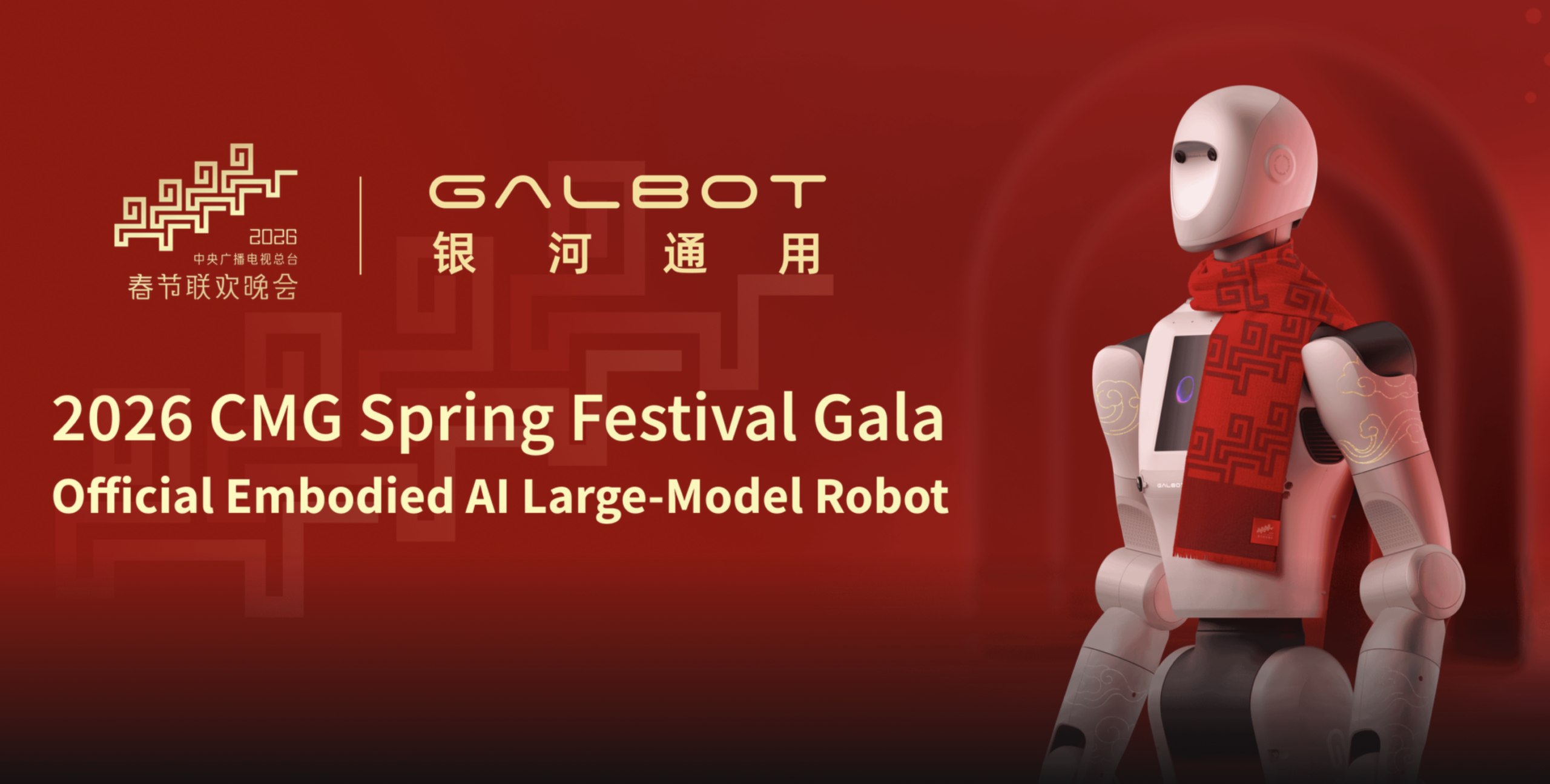
Galaxy General Robot, also known as Galbot, confirmed the completion of a financing round that raised 2.5 billion yuan, the largest single funding event in the embodied artificial intelligence sector so far this year. The round was heavily oversubscribed and completed in less than two months. Investors included two state-owned heavyweights – the National AI Industry Fund (Big Fund Phase III) and state-owned E-Town Capital. Other state-owned investors included energy and petrochemicals giant Sinopec, conglomerate Citic Ltd., auto manufacturer SAIC Motor Corp., and Bank of China.
Industry insiders suggest that the involvement of these industrial giants indicates that the focus of investment has shifted away from concepts toward supply chain synergy, manufacturing capabilities, and the ability to deliver products at scale.
Gala starting gate
The surge in investor confidence comes as the industry’s visibility has soared. During the recent Spring Festival Gala to mark the beginning of the Year of the Horse, humanoid robots were positioned as “silicon-based stars,” creating a huge buzz online and in the investment community.
Noetix Robotics’ consumer-grade robot, Little Bumi, performed street dance routines and interacted with performers. Standing 94 centimeters tall and weighing 17 kilograms, the robot costs less than 10,000 yuan, a price point designed to disrupt the market. The company also featured its “N2” model, which previously won runner-up in a humanoid robot half-marathon, performing continuous backflips, while its “E1” model demonstrated telescopic structural capabilities.
This high-profile exposure is part of a broader commercial strategy to boost its domestic presence and prepare for global expansion, with plans to initiate certification processes for North American and Southeast Asian markets, focusing on local compliance and after-sales service networks. The company intends to prioritize family companionship and education scenarios before expanding into broader applications
The battle for market share
The commercial landscape is becoming increasingly crowded. In addition to NOETIX Robotics, other players such as Hong Kong-listed Ubtech Robotics (09880.HK), and Shanghai-listed Beijing Roborock Technology (688169.SH) and Ninebot (689009.SH), are aggressively targeting the education sector and consumer scenarios ranging from courtyard maintenance to community delivery and elderly care.
Noetix Robotics’ founder, Jiang Zheyuan, said Little Bumi has been priced to meet the purchasing power of budget-conscious educational institutions such as county-level high schools, vocational colleges, and ordinary universities. “They may not be able to afford robots costing tens of thousands, but they can afford one for 10,000 yuan to let students experience technology,” Jiang said. “Price is a means, not an end. The core goal is scale and popularization.”
Technical reality check
Despite the optimism surrounding financing and marketing, significant technical bottlenecks remain.
The head of Unitree Robotics, another prominent player whose robots also appeared at the Gala, offered a sober assessment of the industry’s industrial readiness. Speaking at the Humanoid Robot and Embodied Intelligence Standardization annual meeting on Feb. 28, founder Wang Xingxing said the sector is still in the early stages of development. Robots can now be trained through repetition to perform single tasks with nearly 100% success, but planning of “long-horizon tasks” remains a major hurdle. Once you ask a robot to carry out a long sequence of steps on its own, the success rate falls off sharply due to limits in model generalization and decision continuity, he explained.
So while the Spring Festival Gala may have been a high-profile showcase, the real battle for dominance will be fought on production lines and in the ability to fulfill orders, as companies strive to prove that their “silicon-based stars” can generate sustainable revenue in the real world.
Sources:
投中网:独家|刚上完春晚,这家机器人企业融了10个亿
https://mp.weixin.qq.com/s/ScjV0KoL2mJP6ivS2s1C5g
亿欧网:春晚带火人形机器人赛道,单日两笔重磅融资落地合计超35亿
盖世具身智能:宇树科技王兴兴:单任务成功率近100%,长任务规划仍待突破
https://mp.weixin.qq.com/s/3QK_IPXHdkQl208wuTe1wA